When the bullets stop: how PTSD is affecting refugees, and what can be done about it
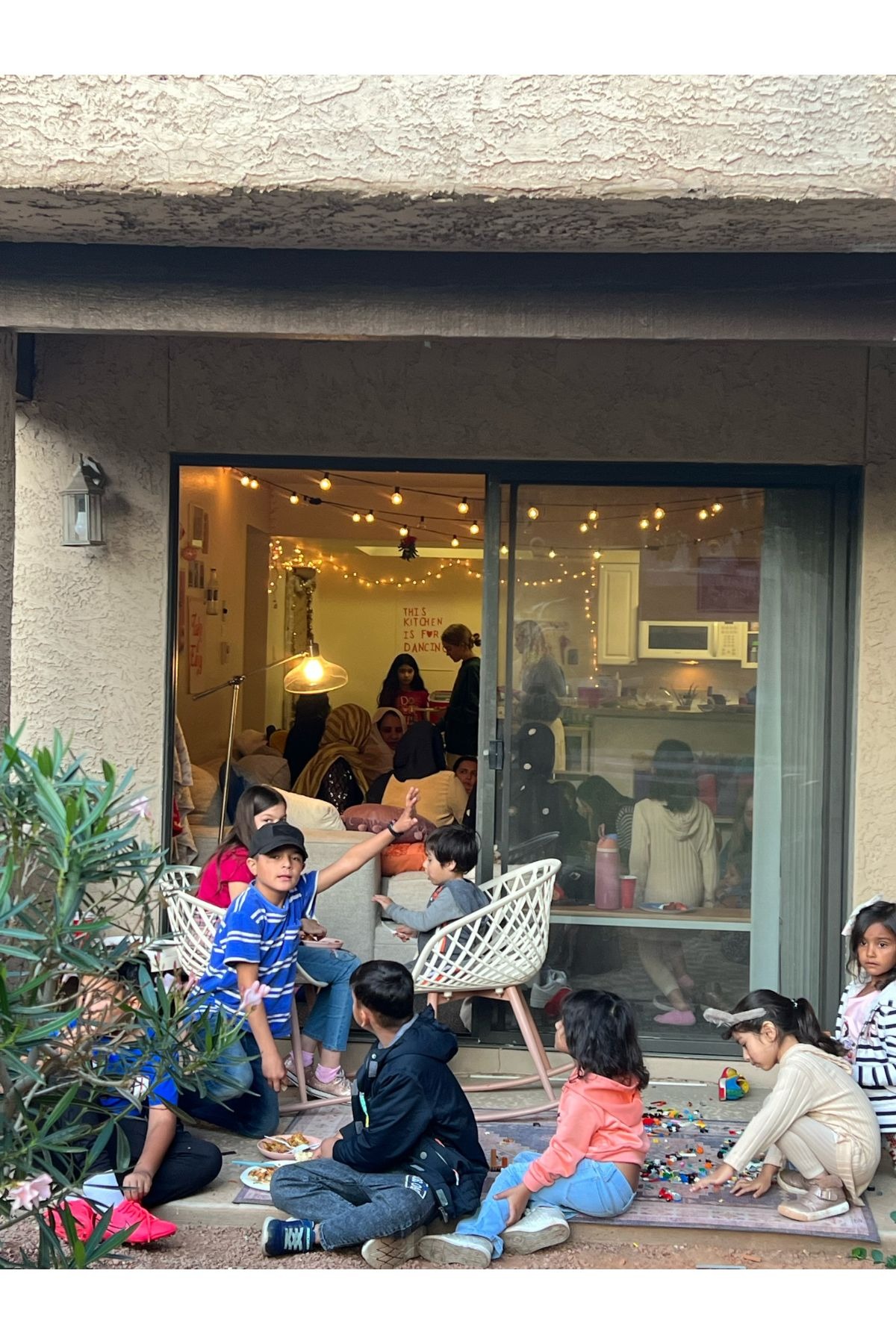
Tan stucco walls, the scent of tea in the air, red rugs covering every inch of the ground, plastic sheeting underneath homemade bread and chicken while whole families gather on the floor around them, laughing and talking. Brothers playing with their baby siblings, girls braiding each other’s hair, friends coming over unannounced just to drink some tea. This is the life of a refugee living in America.
It’s also cultures clashing, parents frustrated that they can’t provide the fun extras for their kids, struggling daily over homework written in a language everyone else knows. Living in a house impossibly too small for a family of 10, relying on friends to get to the store, being ridiculously overqualified for a job, but keeping it because there are no other options.
This is also the life of a refugee living in America, and it is not the same as their life back home.
Many of them have tried to recreate a little bit of Afghanistan or Ukraine or Mexico inside their new homes, but however much they’ve tried to recreate it on the surface, these homes must be different than they were back home because the people inside them have changed. These people have escaped the place where they saw their families killed, lost their jobs, and they’ve had to learn new languages. For some, being a refugee gives them burdens that feel too heavy to put down.
The news today shows Palestine and Israel fighting each other, Taiwan and China clashing, Ukraine and Russia involved in a drawn-out war. Through all of this, there’s an underlying sense of despair that even once the bullets stop flying and peace is declared, things will not just snap back to normal. People, real, human people that are just the same as those reading the stories at home on the news, are caught up in these struggles and, should they survive, they will not be the same. Many will flee their countries to start fresh somewhere else, knowing that if they stay, their lives and their family’s lives are in jeopardy. What happens to these people when the conflict is over?
A quarter of them will develop PTSD.
What is PTSD?
PTSD stands for post-traumatic stress disorder, and a case can be made for this existing for decades, if not centuries, before the first diagnosis was published in 1980. Before this, the syndrome went under names like ‘shell shock’ and ‘soldier’s heart.’
PTSD is caused by exposure to prolonged traumatic experiences, avoidance, and misattribution of blame. Psychologist Briana Boyd, a specialist in treating this disorder, said that “they’re blaming themselves or the wrong ‘other’ for what happened, and that’s what gives them PTSD.” After someone has experienced a trauma, they try to make sense of it by assigning blame, frequently on themselves, and then modifying their behavior to ensure that that trauma cannot happen again. A disorder like this can make resettlement feel impossibly difficult for many refugees.
Today, in order to be counted as a ‘refugee’ by the United States, someone must have experienced persecution or be under threat of persecution because of their religion, identity, race, or political opinions. The refugees who successfully make it to a safe country, like the US, are the lucky ones. Most people who flee their origin country end up stuck in a middle ground at a refugee camp, unable to put down roots in a new place, but also not at home.
Refugees and Trauma
Refugees experience more than enough traumatic things in their process of leaving their home to qualify them for developing PTSD. A scientific compilation of information on refugees and PTSD was published in August 2023, and one of the largest takeaways from it was that refugees experience ample factors to develop PTSD.
Traumatic experiences are often the catalyst causing people to leave their homeland, though it can range from violence to financial instability. As they leave their origin country, refugees typically encounter more violence, along with extended periods of terror and prolonged financial and physical insecurity as they make their way to safety.
This is established in the scientific world, but the critical piece of the 2023 study is the trauma refugees face once they are resettled somewhere new. These new arrivals face racism, food and job insecurity, sickness and loss of hope in their new ‘safe’ homes, reliving the trauma of their past.
This means that refugees are prime candidates for developing PTSD.
PTSD in Refugees
Initially in the 1980’s, PTSD was only used to refer to soldiers returning home from war, but soon after, Holocaust victims and sex abuse survivors were added to the list of potential patients. Now, PTSD is acknowledged to originate from a variety of places, from growing up food insecure to domestic abuse to the sudden death of a family member. What psychologists have seen in the last 10 years is a massive uptick in both refugees arriving from foreign countries, and refugees suffering from PTSD symptoms.
Although researchers are universal in recognizing that refugees can suffer from PTSD, they are less agreed on how many sufferers there are and how to treat them. 27-37% of refugees will develop PTSD, which Boyd says is right in line with typical estimations.
“Let's say that there's a big trauma... 80% of people in that disaster or trauma will recover naturally all by themselves. 20% will go on to get PTSD. The 20% that go on to get PTSD is because of how they are thinking about what happened, and how it was their fault, and how they're feeling, or not feeling, about what happened.”
Diagnosing anyone with a mental illness can be a difficult, complicated thing, and refugees struggling with PTSD is no exception. Syrian refugees are currently the largest group of refugees in the world, and while this most recent study concluded that about 32% of them struggle with PTSD, these numbers are just scientist’s best guesses. Syrians, like a large majority of recent refugees, are predominantly Muslim, and discussing the trauma one has experienced and seeking therapy is not typically encouraged in honor-shame Islamic cultures.
Additionally, because of the nature of the disorder, PTSD symptoms can be disguised, and when politicians and caseworkers begin providing resettlement assistance to refugees, asking deep questions or offering therapy are low on the priority list. Many refugees do not have the means, let alone the desire, to seek treatment for PTSD once they are in a host country due to language barriers, financial hurdles, cultural boundaries and gender roles.
Neglected, not alone
Hearing that someone has received the diagnosis of PTSD can sound ominous, final and hopeless. ‘PTSD’ can be both a word thrown around as a joke about an uncomfortable situation and a sentence for a patient struggling with flashbacks and nightmares. If someone has PTSD, the general consensus is that they must learn to live with it, not be healed from it.
This does not need to be true. Psychologists have found a variety of effective ways of treating PTSD, but these treatments are difficult to do correctly. In essence, drugs help manage the symptoms of PTSD, and certain thought patterns and counseling strategies help address the root of the issue.
All treatment plans focus on showing the patient how the traumatic events they have experienced are not their fault - “you can’t tell someone it’s not their fault - you have to show them,” Boyd says. That isn’t something that people who have experienced trauma want to come to terms with, as letting themselves take the blame puts them back in control in a situation that feels so outside of their power. Once this difficult, crucial step is accomplished, and the past is resolved, the patient jumps forward to the present day and can be healed.
Dr. Boyd has had such great success with treating PTSD that she said if “you treat those things, you treat the avoidance, you treat how they think and let them have their natural emotions about it, they recover - [PTSD] is highly treatable.” She has had people be cured from PTSD in as little as 4 sessions, though she says that it often takes 1-2 years for people to be completely cured and without regressions.
Prolonged exposure therapy and cognitive processing therapy are two different methods that are proved to be effective in curing PTSD patients in general and refugees in particular. Both focus on consistently exposing the patient to their trauma in small doses to show that it is not something to be afraid of. The August study also reported particular progress with eye-movement desensitization and reprocessing (EMDR) therapy, and there is a special treatment method developed especially for treating refugees: narrative exposure therapy.
NET was designed to acknowledge that the trauma that refugees go through is generally not one or two climactic events, but a build up of many awful things. Through NET, therapists counsel refugees through helping them write out their life story, including both the traumatic things that have happened in their life as well as the positive ones. This helps PTSD patients understand how everything shapes together into their identity, and that the negative memories are only a part of their story, and not its entirety.
However, these treatments are nowhere to be heard of when it comes to talking about PTSD and trauma in general. While EMDR, NET, and various exposure therapies all have track records for working to cure PTSD, especially in refugees, this information is not widespread, and there are few therapists who know how to treat PTSD correctly. There is a difference between healing someone from PTSD, and listening to someone traumatized talk, but Boyd says that unfortunately, many therapists don't know the difference.
“You can go to therapy every day for the rest of your life til the cows come home, but if you don't get specific treatment that addresses the nervous system dysfunction, you’ll never get over [your trauma] and you'll never get better - you have to use specific methods that get at it.”
Refugees, PTSD, and the American Dream
There are at least 4.5 million refugees in America. Even if the low end of these statistics mentioned above are true, and a quarter of the people entering this country looking for safe haven are suffering from PTSD, something must be done. America cannot help these refugees move on from the horrific things that have happened to them without addressing the roughly 1,000,000 refugees dealing with PTSD, and helping them is the duty a country takes on when it welcomes refugees into its borders.
As discussed earlier, it can be difficult to find, or even know about, the appropriate and effective PTSD treatments that are out there. This problem can be compounded considering the language, cultural, and logistical barriers that are frequently in place for refugees seeking help. However, hope is not lost.
Psychology Today has an excellent search catalog with 40 of the largest cities in America where one can look up professionals with varying qualifications and specialties. There are many local chapters of national organizations that assist refugees in resettlement that point people in the right direction for seeking help - places like the International Rescue Committee, World Relief, or the U.S. Committee for Refugees and Immigrants all exist to help refugees acculturate to life in America, and if they do not directly offer counseling services, all are able to refer patients to places that do.
No one should be left in the dark about treatments available to them, especially not when these treatments have such high success rates. Friends down the street don’t deserve to suffer endlessly from PTSD, and America should not let the pain continue. Seeing the conflict occurring daily all over the world emphasizes the need for better mental health assistance for the people left standing when the bullets stop flying.
Post a comment